Struggling to choose an exhibition? Should you prioritize "ease of viewing" versus "depth of content"? What criteria should you use to make your decision?
When choosing an important exhibition, most people overlook a crucial factor: the practical conditions of how they will actually attend. An exhibition is not simply about "what it shows," but also about how to get there, where to view it, and how long to stay, all of which determine the quality of the viewing experience. This article focuses on two criteria – "viewing convenience" and "depth of content" – to provide a practical comparison that helps you determine which exhibition is right for you. In conclusion, exhibitions with high viewing convenience save time and energy, while exhibitions with deep content offer immersion and reflection. However, for most general visitors, prioritizing "convenience" is a realistic choice.
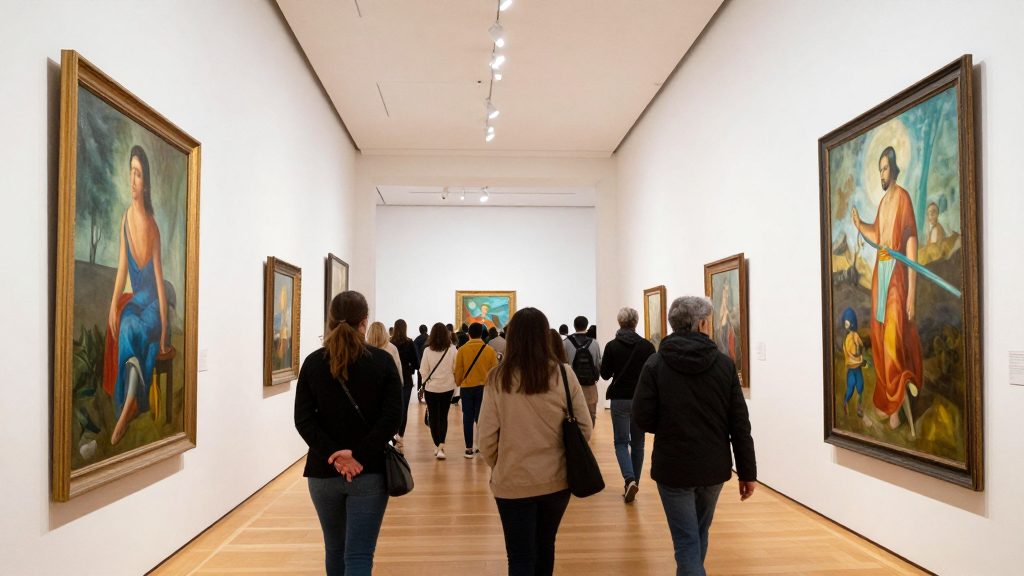
Main Points: 'Viewing Convenience' vs. 'Depth of Content' — Key Comparison Items
1. Accessibility and Travel Time - Viewing Convenience: Exhibitions held in locations directly connected to subway stations or large exhibition centers with ample parking (e.g., COEX, Go Podium) significantly reduce travel time and effort. Using public transportation minimizes traffic congestion and transfer hassles. - Depth of Content: Exhibitions located in more remote areas, universities, or complex cultural spaces may have lower accessibility. However, this can be closely linked to the artistic intent, and some exhibitions offer an immersive experience worth enduring the transportation inconvenience.
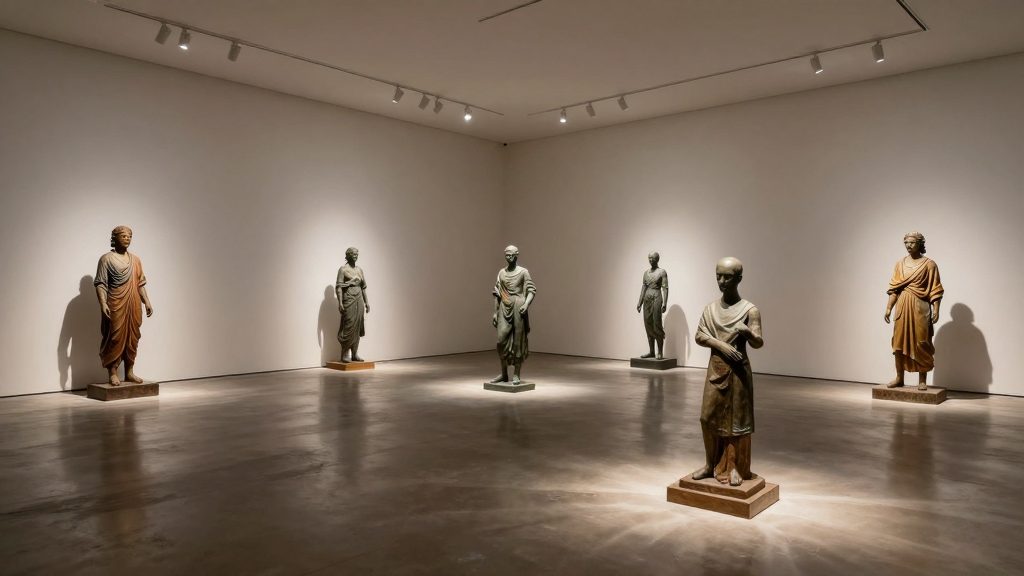
2. Exhibition Structure and Flow Design - Viewing Convenience: Exhibitions with a clear flow (e.g., chronological order, thematic sequence), ample signage, and short distances between key artworks provide a natural viewing experience. Exhibitions with well-indicated emergency exits, restrooms, and clear pathways reduce physical strain. - Depth of Content: Exhibitions with complex structures or non-linear flows (e.g., combining philosophical themes in various ways) encourage contemplation, but can be disorienting if they are too long or lack sufficient explanations. This requires focus and patience.
3. Information Density and Immersion Relative to Viewing Time - Viewing Convenience: Exhibitions that offer a sufficient number of artworks and explanations within a reasonable time (1.5-2 hours), while delivering key messages without overly complex descriptions, enable a "smart" viewing experience. They are suitable for families and friends. - Depth of Content: Exhibitions with lengthy descriptions, interactive elements, and a rich historical context behind the artworks may require viewing times of 3 hours or more. This is necessary for in-depth understanding, but may conflict with typical leisure time.
4. Basic Infrastructure and Amenities - Viewing Convenience: Exhibitions with well-equipped restrooms, water fountains, rest areas, auxiliary seating, and charging outlets reduce fatigue and are less stressful for the elderly or those with children. - Depth of Content: Some artistic experiments or installation exhibitions may prioritize space and creative use over infrastructure. This can sometimes lead to discomfort due to a lack of facilities.
| Item | Viewing Convenience (Priority) | Depth of Content (Priority) |
|---|---|---|
| Accessibility | Near subway/airport, parking available | Relatively remote or special location |
| Flow Design | Clear path, complete signage system | Non-linear flow, complex connections |
| Cognitive Load | Sufficient with simple explanations | Complex explanations, requires background knowledge |
| Amenities | Restrooms, charging stations, rest areas available | Lack of facilities, focus on viewing experience |
Recommended For:
- People who 'find it difficult to stand for long periods or read lengthy explanations': If you want to avoid situations where you have to rest frequently or move around a lot, choose an exhibition with high viewing convenience. This is especially important when viewing with family or friends, as it helps reduce stress.
- People who 'want to read messages or philosophies rather than just see an exhibition': If the exhibition space encourages continuous contemplation and offers a rich meaning behind the artworks, choosing an exhibition focused on depth of content will increase your sense of accomplishment. However, you need a pre-planned schedule and energy level.
- People 'who are seeing an exhibition while traveling': If your time and travel distance are limited, it is more practical to prioritize convenience. Otherwise, pursuing "depth of content" without a specific reason can lead to fatigue and disappointment.
Overall:
An exhibition is not just about "seeing," but about "experiencing." The quality of that experience depends more on how you view it than on the content itself. Since most visitors see exhibitions during their leisure time, which often starts after 5 PM on weekdays, choosing an option that considers convenience to avoid physical and mental fatigue is the most practical choice. Of course, you should always seek out meaningful exhibitions, but that decision should be based on "how much time and energy you have left." This will allow you to achieve true satisfaction.
Related posts
Seven Key Checkpoints for Exhibition Preparation.
Essential Checklist for Exhibition Beginners: 4 Key Principles Every Novice Should Know.
Here are 5 key pieces of "real information" that exhibition attendees often miss, based on practical advice gathered from post-event feedback:
Why should preparations for the exhibition start at this time?
Popular posts
Seven Key Checkpoints for Exhibition Preparation.
Essential Checklist for Exhibition Beginners: 4 Key Principles Every Novice Should Know.
Comments 0