Expo 86 to SkyTrain: Guide to modern transit
The legacy of a global event often lives within the tracks laid to serve it.
The Expo 86 era fundamentally reshaped the regional landscape, providing the impetus for the modern SkyTrain network that serves Vancouver today. This transit evolution moved the city toward a highly automated, grade-separated system that prioritizes reliability and frequency.
This guide examines the development from the initial budget to current network expansions, the operational mechanics of the automated lines, and the connectivity provided by various routes.
Key takeaways: * The original SkyTrain was built on a budget of $854 million in 1986 dollars. * The system utilizes fully automated trains on grade-separated tracks for high reliability. * Peak period frequencies vary between 2 and 7 minutes depending on the specific line segment.
How did Expo 86 influence the SkyTrain development?
In the golden light of sunset, an old man touches the cold steel of a pillar, remembering the dawn of the expo.
A single train glides silently through a concrete guideway, marking the start of a new era in urban mobility. The initial infrastructure was established with a budget of $854 million in 1986 dollars. This investment laid the groundwork for the modern SkyTrain development seen across the region.
This early investment focused on creating a reliable backbone for a growing metropolis. By establishing grade-separated tracks, the city ensured that transit could move independently of street-level traffic.
This foundational work allowed for the subsequent expansion of the network into the complex system used today.
The legacy of the World Fair provided the foundational infrastructure that allowed the rapid transit system to grow from its initial routes.
What defines the current SkyTrain modern transit system?
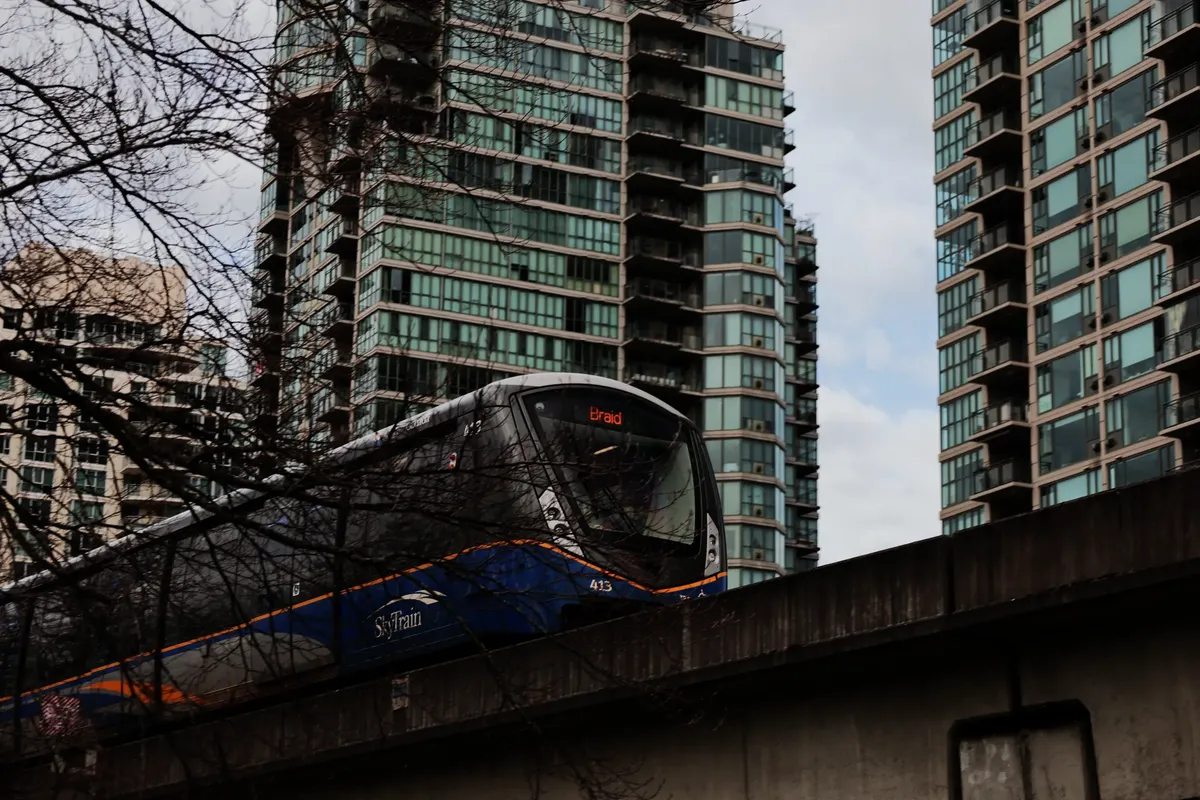
A passenger stands on a platform, watching a driverless train approach with mathematical precision. The SkyTrain has 79.6 km (49.5 mi) of track and uses fully automated trains on grade-separated tracks running on underground and elevated guideways.
This setup allows the system to hold consistently high on-time reliability.
The use of automated technology on dedicated guideways minimizes human error and external interference. Because the tracks are grade-separated, the trains do not encounter traffic lights or pedestrians. This technical characteristic is a primary reason for the system's consistent performance.
The system is characterized by its automated technology and high-frequency service.
How does the Vancouver transit change affect peak hour travel?
Commuters gather at a busy station, checking their watches as the next train arrives within minutes. During peak periods, trains between Waterfront and Columbia arrive every 2 to 3 minutes.
Between Waterfront and King George, trains arrive every 2 to 5 minutes during peak hours, while trains between Waterfront and Production Way arrive every 6 to 7 minutes in the peak hours.
The frequency of service is designed to handle varying passenger volumes across different segments of the network. While some routes offer very rapid turnaround, others provide slightly longer intervals to balance the entire transit network.
This variability ensures that even as the network grows, service remains frequent.
Increased frequency during rush hours helps manage the higher volume of commuters.
What are the details of the SkyTrain expansion and connectivity?
A rider walks through a bright station, looking for a transfer to a different line. The Canada Line, which opened on August 17, 2009, added 15 stations and 19.2 km (11.9 mi) to the SkyTrain network.
Additionally, the Millennium Line has 17 stations, three of which are transfer stations with the Expo Line: Commercial–Broadway, Production Way–University, and Lougheed Town Centre.
Connectivity is further enhanced by stations that link to other transit modes. Two Millennium Line stations connect with the West Coast Express commuter train at Moody Centre and Coquitlam Central. These connections allow for a much broader reach across the metropolitan area.
| Line Segment | Peak Arrival Frequency |
|---|---|
| Waterfront to Columbia | 2 to 3 minutes |
| Waterfront to Production Way | 6 to 7 minutes |
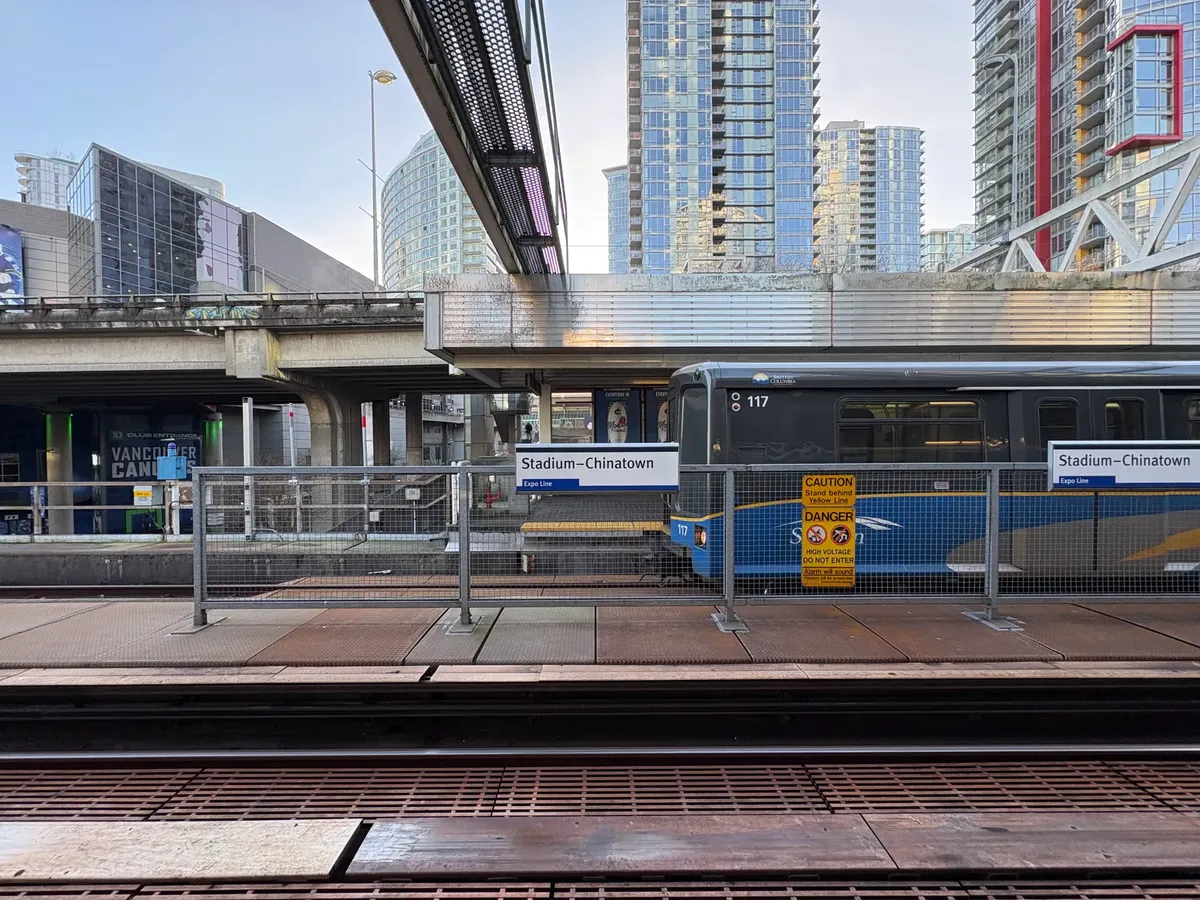
I remember standing at a transfer point, realizing how much the network had grown since those first lines were laid.
The expansion process involves several key stages: 1. Identifying new transit corridors. 2. Constructing new guideway segments. 3. Integrating new stations into the existing network.
How can riders manage transfers and fare rules?
A traveler taps a card and moves smoothly from one platform to another. One-time fares are valid for 90 minutes on any mode of transportation with any number of transfers, including all SkyTrain lines and bus and SeaBus routes.
For those traveling near the airport, travel on the Canada Line is free between the three Sea Island stations: Templeton, Sea Island Centre, and YVR–Airport.
The 90-minute window allows for seamless movement between different modes of transport. While the system is highly integrated, certain specific zones like the Sea Island stations have unique fare rules. Understanding these distinctions helps riders navigate the system efficiently.
In this sequence, the second step is the longest.
How do different lines connect in the city center?
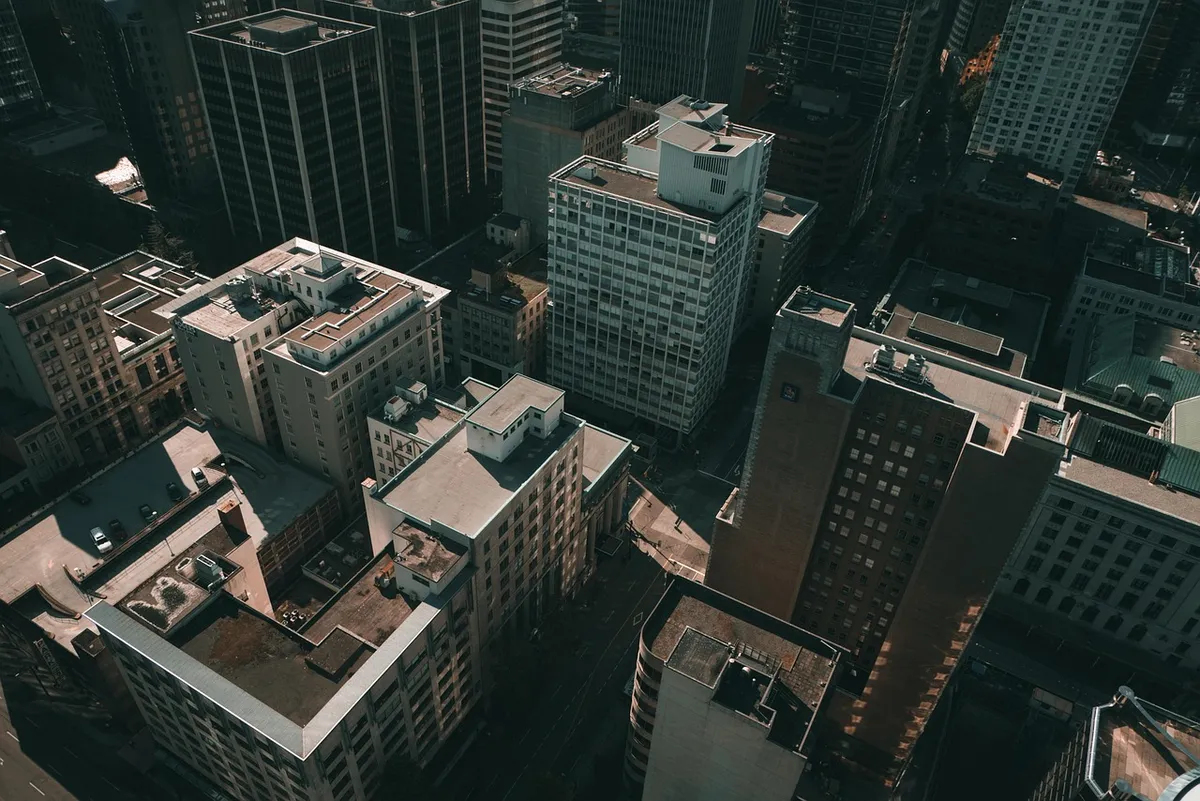
A pedestrian walks through a shopping mall, following signs toward a transit entrance. Waterfront station is the only station where the Canada Line directly connects with the Expo Line.
However, Vancouver City Centre station is within a three-minute walk from Granville station via the Pacific Centre mall, making an unofficial transfer to the Expo Line.
These connection points are vital for navigating the downtown core. While some transfers are direct and built into the station architecture, others require a short walk through urban amenities. This mix of direct and indirect connectivity defines the urban transit experience.
Central hubs allow passengers to switch between lines through integrated station layouts.
Related
- Astana Expo BIE vote: Bodies shape the hosting selection
- What are the emerging Wine Business Innovations?
What is the enduring legacy of this transit system?
The legacy of a global event, like the Expo 86, is seen in the enduring functionality of the SkyTrain. The original investment established a modern transit backbone that continues to serve the region.
This system evolved from a specific event requirement into a permanent piece of urban infrastructure.
The initial vision, born from the Expo era, was to create a high-capacity mover for a growing metropolis. The subsequent success of the SkyTrain demonstrates how a focused initial investment can yield long-term civic benefits.
This modern network owes its existence to that early commitment to grade-separated movement.
The operational reliability achieved through automation speaks to the success of the initial planning phase. This foundational work allowed the system to scale up its service without compromising its core promise of predictable movement.
Wikipedia: Expo 2020 Based on the retained excerpt mentioning Dubai Exhibition Centre: The Expo 2020 metro station connects the site to other localities in Dubai, along the Dubai Metro's Red Line directly to the entrance of the Dubai Exhibition Centre and Al Wasl Gate.



Comments 0