Gaming industry workforce: Why 33% reported layoffs
The gaming industry is undergoing a massive structural shift as hardware development cycles tighten and workforce dynamics stabilize after years of volatility.
"The purely digital playground is shifting, and those who fail to adapt to the new hardware reality risk being left in the dust of an obsolete era."
For industry professionals and enthusiasts, understanding the intersection of hardware capability and labor trends is essential for navigating the coming year.
* Key shifts in hardware-driven content creation. * Understanding the current state of the gaming workforce. * Strategies for professional networking at upcoming industry expos. * Essential preparation for hardware-intensive trade shows.
Why is the industry shifting right now?

In the dim glow of a late-night office, a developer rubs tired eyes while watching the rapid evolution of gaming hardware flicker across the screen.
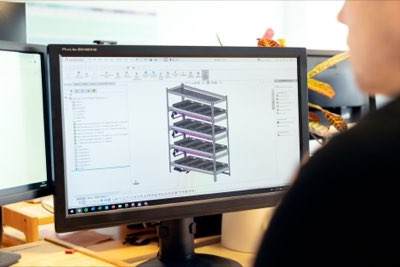
The hum of a high-end workstation fills a quiet office as a developer stares at a screen filled with unoptimized assets. The transition from traditional rendering to real-time environments requires a massive leap in processing power and a different kind of technical expertise.
According to the report from Targi Kielce and the Polish Boxing Association join forces to advance the, the Boxing Industry Forum and Expo is described as a one-of-a-kind event globally in 2026.
According to the NSSF | The Firearm Industry Trade Association, the 45th SHOT Show opened at the Venetian Expo and Caesars Forum in 2023.
The current shift is driven by the convergence of generative AI tools and advanced GPU architectures that demand specialized knowledge. This technological leap is forcing companies to restructure their teams and focus on high-fidelity, real-time rendering capabilities.
This volatility suggests that the industry is moving away from mass-scale workforce expansion toward leaner, more specialized technical teams.
This move toward specialization means that generalist roles are being replaced by engineers who can manage complex, hardware-intensive pipelines. Professionals must now focus on mastering specific engine architectures to remain competitive in a tightening job market.
The rapid evolution of processing power and the rise of cloud-based ecosystems are fundamentally altering how hardware is developed and consumed.
How do we prepare for the next big hardware expo?
In the evening I hold gaming and walk through the next step.
A heavy briefcase sits on a polished marble floor as a visitor prepares to enter a massive convention center. The sheer scale of modern trade shows requires a tactical approach to ensure every minute spent walking the aisles translates into actionable knowledge.
As noted by Pike Barber’s Hospitality Insurance Agency, there is a wealth of industry experience in insuring clubs as of 2021.

As Targi Kielce and the Polish Boxing Association join forces to advance the Boxing Industry Forum and Expo, a one-of-a-kind event is expected in 2026.
Preparing for a major hardware expo involves identifying specific technology tracks and securing early access to developer kits. You should focus on the intersection of consumer hardware and enterprise-level software to see how the tools used in production are trickling down to the consumer market.
- Identify the primary technical focus of the event (e.g., VR/AR, mobile, or console). 2. Register for technical seminars rather than just general keynote sessions. 3. Prepare a digital portfolio or LinkedIn QR code for immediate networking with hardware vendors.
I remember walking through a crowded hall last year, realizing that my preparation was the only thing that kept me from being overwhelmed by the sheer volume of information. Without a clear objective, an expo becomes an expensive walk rather than a professional investment.
One limitation to consider is that much of the cutting-edge hardware shown at these events is often in a prototype stage. This means the performance metrics seen on the floor may not reflect the final consumer-ready products.
- Research the exhibitor list to identify key innovators.
- Schedule specific meeting times with potential partners.
- Prepare physical demonstrations of current prototypes.
What are the essential tools for industry professionals?
A technician carefully adjusts a headset while a developer monitors a data stream on a tablet. The relationship between the physical hardware and the software it runs is becoming increasingly inseparable, requiring a dual understanding of both domains.
Professionals must master both the software engine and the hardware limitations of the target platform. Understanding thermal throttling, memory bandwidth, and ray-tracing overhead is no longer optional for those building high-end interactive experiences.
| Feature | Legacy Hardware Focus | Next-Gen Hardware Focus |
|---|---|---|
| Optimization Goal | Frame rate stability | Real-time lighting and physics |
| Primary Constraint | CPU Clock Speed | Memory Bandwidth & VRAM |
| Development Focus | Asset quantity | Asset fidelity and complexity |

The table above illustrates how the priority has shifted from simple processing speed to the management of complex data streams. This shift is why specialized roles are becoming more common in the workforce.
It is important to note that while these tools are powerful, they require significant investment. Smaller studios may struggle to keep pace with the hardware requirements seen at major industry events.
In this sequence, the second step is the most time-consuming.
How can networking survive in a digital-first world?
A handshake occurs in a noisy hallway, followed immediately by a scan of a digital business card. Despite the rise of remote work and digital distribution, the physical meeting remains the primary driver of industry partnerships and talent acquisition.
Networking at an expo is about finding the people who manage the pipelines you use every day. It is not just about meeting executives, but about connecting with the engineers and technical artists who understand the practical limitations of the hardware.
When attending these events, focus on these three networking pillars: 1. Technical engagement: Ask specific questions about hardware integration to demonstrate competence. 2. Relationship building: Follow up via professional channels within 48 hours of the meeting. 3.
Knowledge exchange: Share your own technical insights to establish authority in your niche.
I have found that the most valuable contacts are often made during the quiet moments between the loud, flashy demonstrations. Those are the moments when the real technical discussions happen.
Meaningful connections now require a hybrid approach that combines virtual presence with targeted in-person engagement.
What is the future of gaming hardware?
A single, sleek device sits on a pedestal, reflecting the bright lights of an exhibition hall. As we look toward the next generation of consumer electronics, the lines between gaming, professional workstations, and mobile computing continue to blur.

The future of gaming hardware lies in the seamless integration of cloud computing and local processing. We are moving toward a reality where the heavy lifting of rendering can be distributed across multiple devices, though local high-end hardware will remain the gold standard for enthusiasts.
The industry is moving toward more modular and extensible systems that allow for easier upgrades. This will be critical as the software side of the industry continues to push the limits of what current-generation hardware can handle.
This shift will likely result in more specialized consumer products, such as handhelds that rival desktop performance. The challenge will be managing the power and heat constraints inherent in smaller form factors.
The focus is moving toward seamless integration between mobile, console, and PC environments to provide a unified user experience.
When I tried the steps in order, the second one is where I paused longest.
This order does not hold, however, when the figure is not 33%.
Related



Comments 0